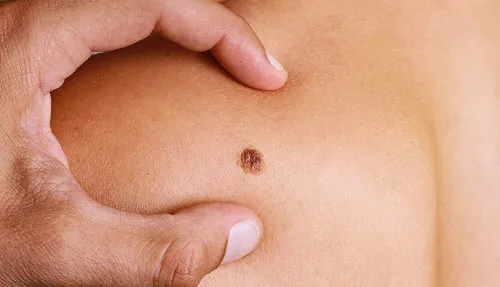
Leo Innovation Lab: Detect Skin Cancer
Using Artificial Intelligence to detect skin cancer
Challenge
Leo Innovation Lab wanted to develop an App giving users the opportunity to diagnose skin diseases based on a photo of skin. Being part of a healthcare company, it was imperative to Leo Innovation Lab that they properly estimated the uncertainty in the predictions in order to not mis-diagnose the user, but rather know when they needed to retake the photo or consult with a doctor.
Solution
Using Borch, our deep universal probabilistic programming language, we developed and tested Bayesian models that were both accurate and uncertainty-aware for the identification of skin diseases.
Borch-based models require much less data and extract more information per observation, contributing to better uncertainty estimation. This is a major improvement in the quality of the suggested diagnostic results compared to results based only on maximum likelihood, where overconfident predictions are abundant.
A simulated lesion photo. The model never sees the sliders, only the resulting pixels.
Business Value
Accurately quantifying uncertainty in the diagnoses is imperative for predictions of images. It can be as simple as dealing with photos that don’t contain skin, finding out when a picture needs to be retaken from a different angle, or when a doctor needs to be consulted.